
19/06/2026
The High-Water mark
Newsletter #93 - June 2026
The first hike in three years
On 11 June, the Governing Council of the European Central Bank raised its three key interest rates by 25 basis points. The deposit facility rate was raised to 2.25%, with effect from 17 June 2026. It is the first increase in the cost of money in the euro area since 2023.
The Council framed the move as a response to the inflationary consequences of the conflict in the Middle East, describing it as “robust across a range of scenarios.” The accompanying staff projections set out the reasoning. Headline inflation is now expected to average 3.0% in 2026, 2.3% in 2027 and 2.0% in 2028 — a path revised up for the first two years.
Two numbers matter more than the headline. Inflation excluding energy and food was also revised up, to 2.5% in both 2026 and 2027. At the same time, the growth forecast was cut to 0.8% for 2026. The balance of risk is asymmetric: to the upside on inflation, to the downside on growth.
Reading the May print
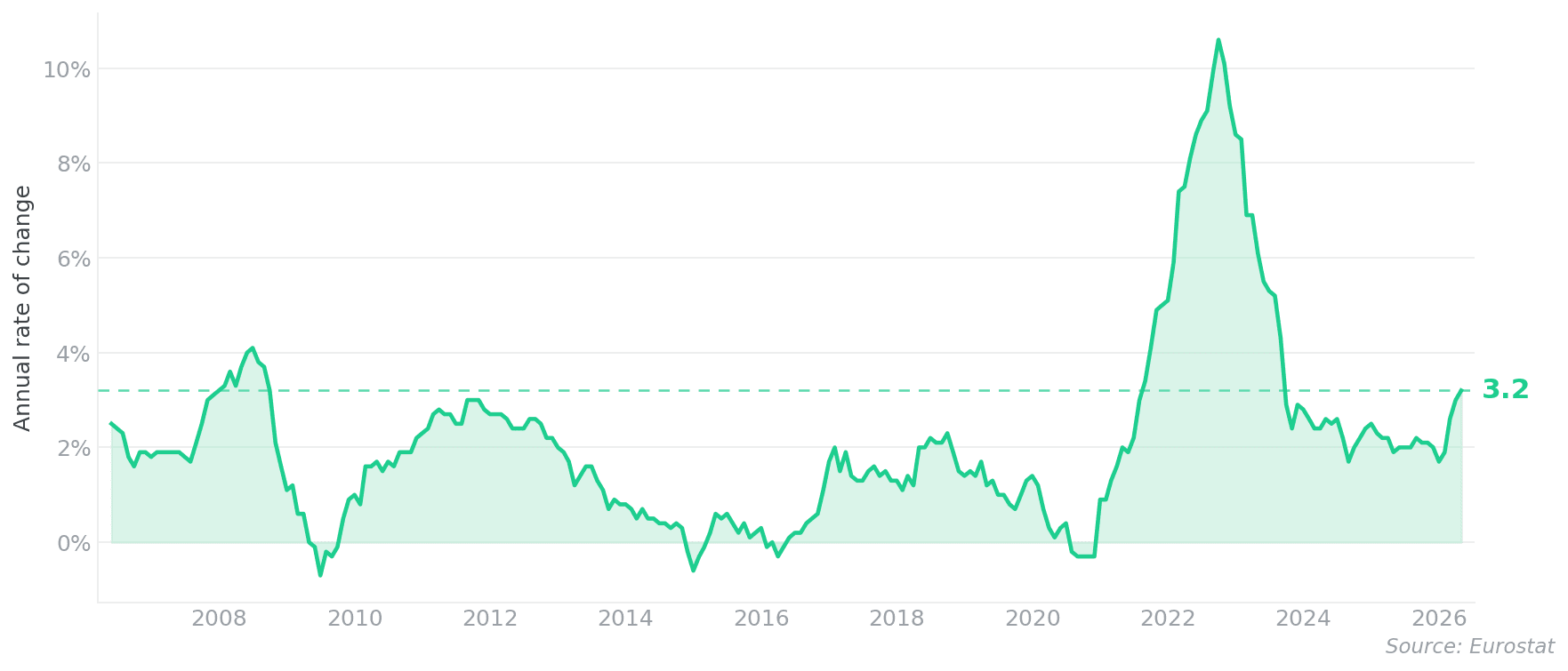
Euro area annual inflation reached 3.2% in May, up from 3.0% in April and just 2.5% in March. Seen through the headline alone (Figure 1), an inflation rate that had been sitting close to target has clearly broken above it.
Figure 1 Total HICP — annual rate of change
Broken into its parts, the May reading is strikingly uneven: energy at 10.8%, services at 3.5%, food including alcohol and tobacco at 1.9% and non-energy industrial goods at just 0.9%. The task is to separate what inflation will pass from what will stay.
Energy: the trigger, not the story
Figure 2 Energy — annual rate of change
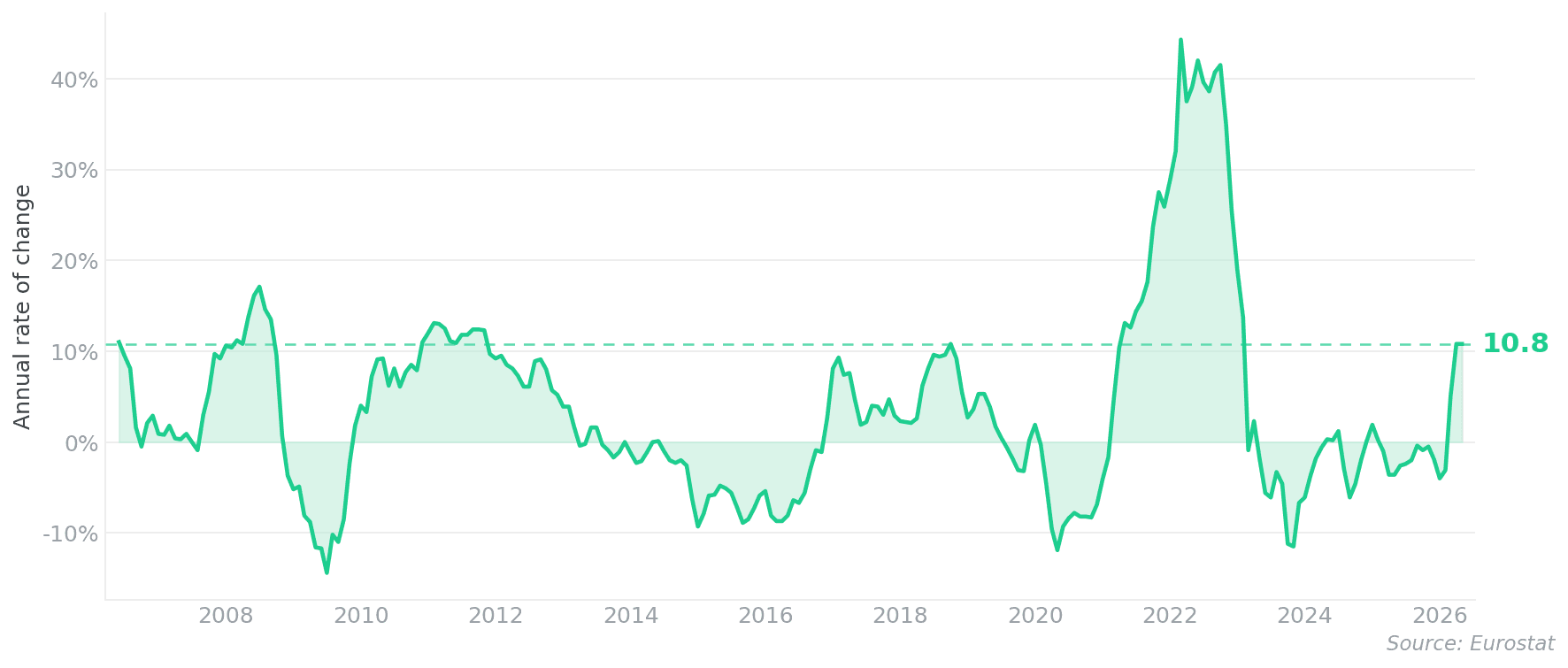
Energy is by far the most volatile part of the index. As Figure 2 shows, its annual rate has swung between roughly +44% and −15% over the past two decades, overshooting in both directions before reverting each time. The current jump to 10.8% reflects the disruption to oil and gas shipments through the Strait of Hormuz, the risk we set out in our March and April newsletters.
The important point is that an energy shock is a relative price event, not a general one. It lifts the price level, but the annual rate is mechanical. If oil and gas prices simply stop rising — even at a high level — the year-on-year contribution from energy will fall sharply within twelve months, as the comparison base catches up.
On its own, then, the energy spike would not justify a sustained tightening cycle. A central bank does not normally raise rates to fight a shock it expects to reverse. How long the disruption lasts is the open question, and we make no attempt to predict it. The arithmetic of base effects, however, is not in doubt.
The stickiness beneath
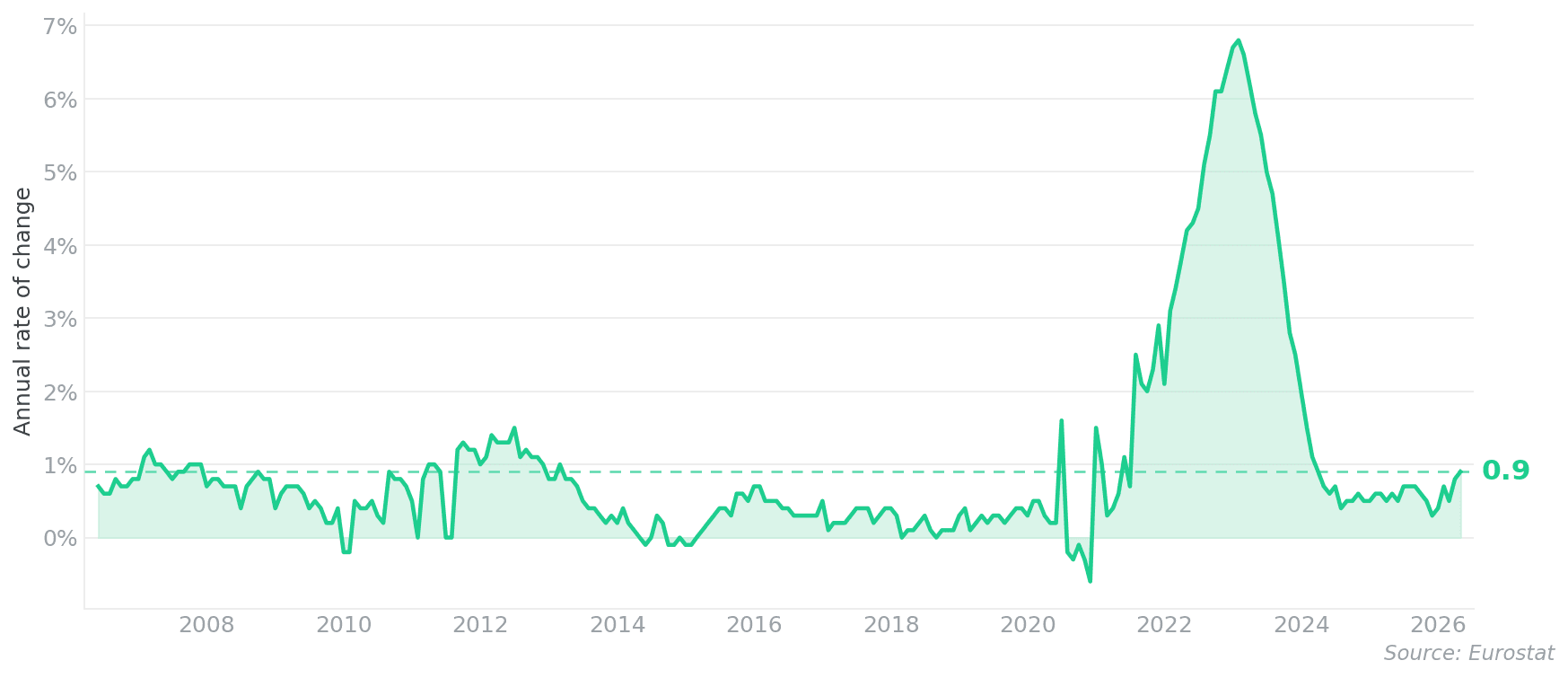
If energy is the part that passes, what is the part that stays? The other components answer the question. Food inflation (Figure 3) has eased back to 1.9%, and non-energy industrial goods (Figure 4) sits at just 0.9%.
Figure 3 Food incl. alcohol & tobacco — annual rate of change
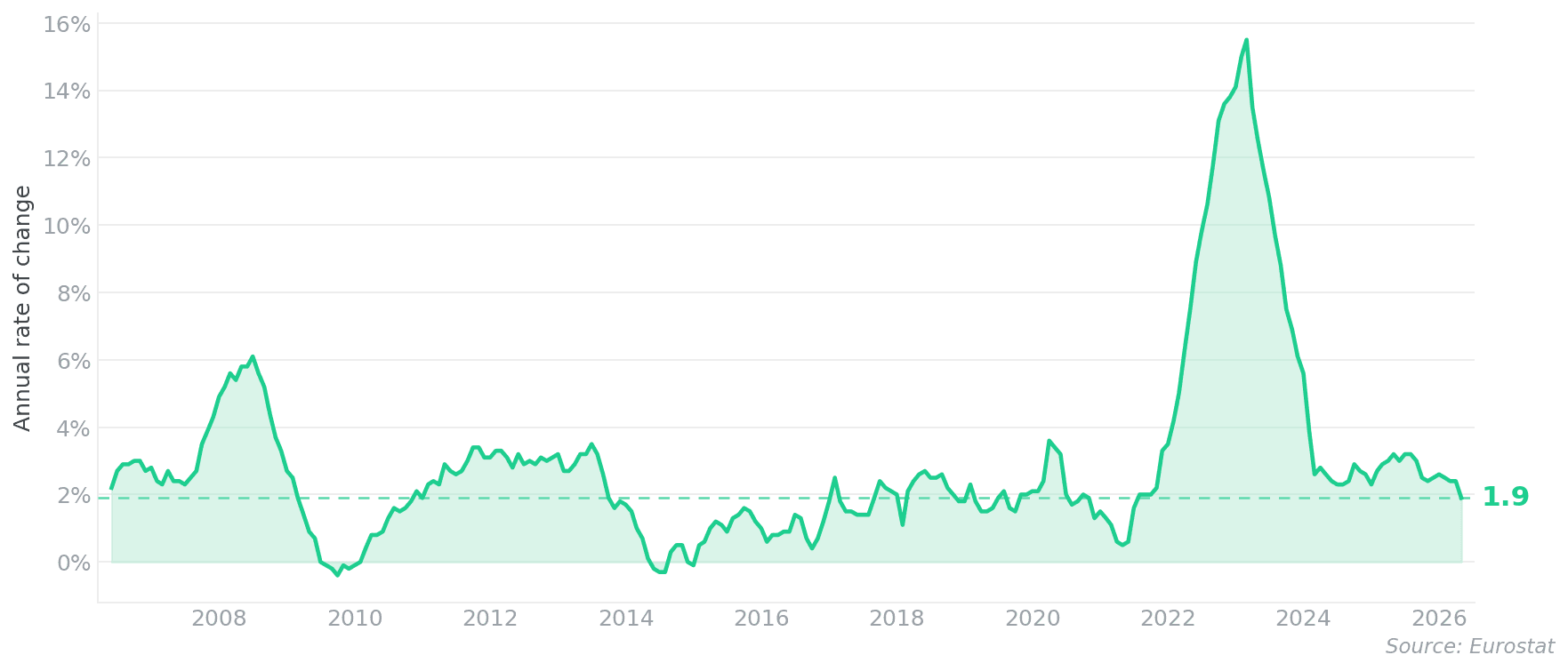
Figure 4 Non-energy industrial goods — annual rate of change
These categories are not today’s problem, but they share a revealing property: their prices are sticky on the way down. The disinflation of 2024-25 slowed the rise; it did not unwind the level. Goods and food prices do not return to where they started; they simply stop climbing as quickly.
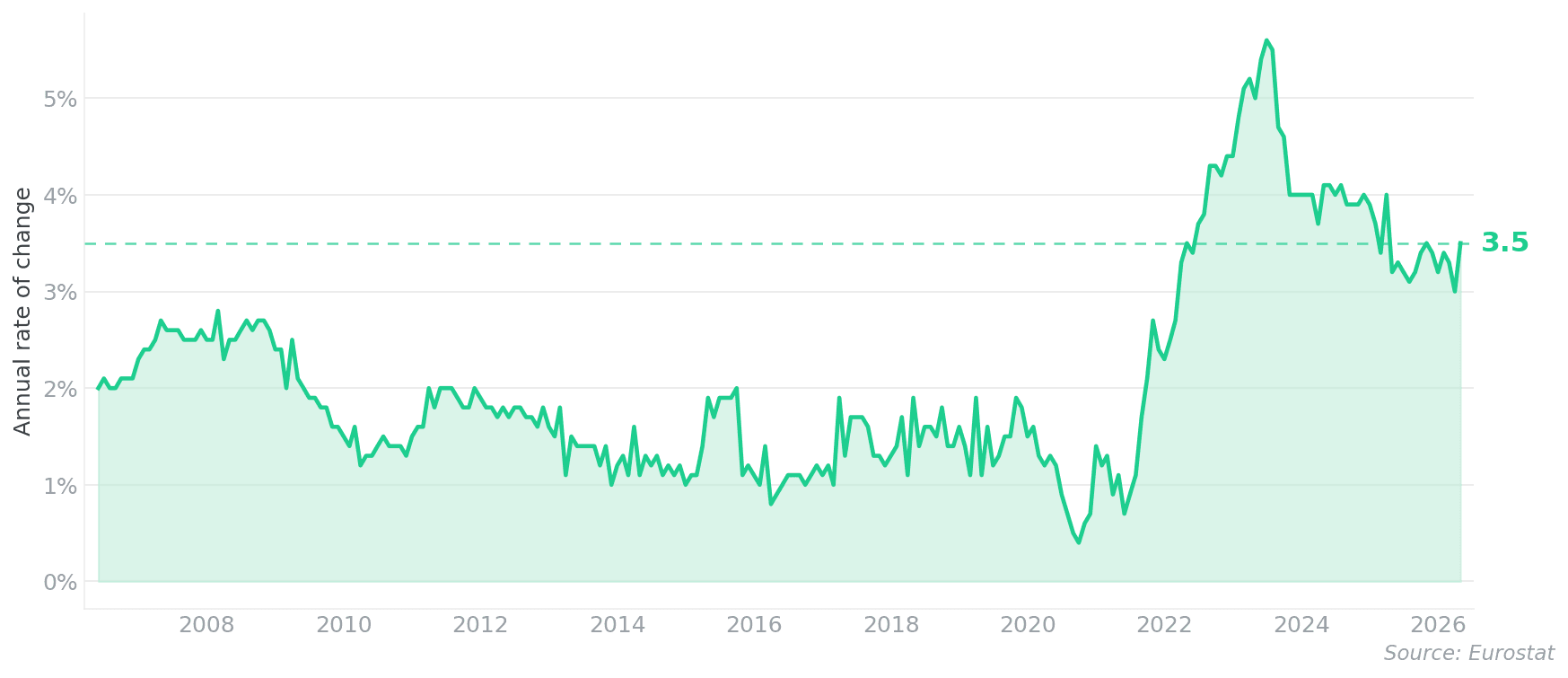
The real concern is services. At 3.5% (Figure 5), services inflation is the highest of the core components, and it has barely dipped below 3% since the pandemic. Services are domestically generated and labour-intensive, which makes them far slower to disinflate than goods or energy. A services inflation rate of 3.5% is not consistent with a 2% headline target on any durable basis.
Figure 5 Services — annual rate of change
This is where the energy shock becomes dangerous. As we discussed in March, drawing on the European Commission’s modelling, the direct effect of a commodity shock badly understates its eventual reach. Indirect channels (the pass-through of higher costs into goods and services) “amplify and prolong the initial shock.” A spike that lasts long enough to lift expectations does not vanish when oil prices fall; it leaves a mark.
Why the ECB really moved
Read this way, the June decision is not really about energy. The Council was explicit that the higher path for energy prices is “expected to feed into food, goods and services inflation,” and it lifted its core projection accordingly.
ECB is not raising rates to bring down the price of petrol, over which it has no influence. It is leaning against the spillover i.e. the risk that a temporary energy shock becomes lodged in underlying inflation through pricing behaviour and expectations, the same mechanism that keeps services elevated. The hike is insurance against persistence, not a reaction to the spike.
The path ahead
Markets had all but fully priced in the June move before it came, and attention has turned to how much further the Council will go. Pricing currently points to roughly one more hike, with the outcome of the September meeting close to a coin toss.
In the more adverse energy scenarios — a prolonged disruption that keeps feeding the core — that tail extends to two or three further increases, which would take the deposit rate towards 2.75—3.0% by the year-end. The Council has declined to pre-commit, repeating that it will move meeting by meeting as the data dictate.
The delicate balance
The difficulty is that the ECB is tightening into a supply shock at a moment when euro area growth has already been cut to 0.8%. Higher rates do nothing to bring more oil through the Strait of Hormuz; they work only on demand. The Council is therefore accepting weaker growth, and a greater risk of a policy-induced slowdown, to protect the credibility of its target. This is the delicate balance we flagged in March and May, and the margin for error is slim.
For investors, the signal to watch is not the headline, and certainly not the price at the pump. It is services. Over the next twelve months, base effects will pull the energy contribution (and the headline with it) lower almost mechanically. What is left standing when the base effect has kicked will decide the rate cycle.
If services ease back towards 2%, the June hike will prove a short detour. If they hold near 3.5%, the ECB has further to travel and the front end of the curve will reprice again.
When the tide goes out, it is the watermark that shows how high the water rose. The energy spike will recede. The mark it leaves on services is the number that matters — and, for now, it is not coming down.
Investors should be following these developments closely in the months ahead.
